Should You Static Stretch Before a Workout? Here's What the Research Says.
Still holding long stretches before you lift or sprint? Coach Mel Rowland breaks down what 104 studies say about static stretching and performance.
By
August 24, 2026


For years, static stretching—holding a stretch for 20 to 60 seconds—was considered an essential part of warming up. But a large review of the scientific literature suggests it may not be the best choice before activities that require strength, power, or speed.
Researchers analyzed 104 studies examining the immediate effects of static stretching before exercise. Their findings showed that static stretching performed as the only warm-up activity can temporarily reduce athletic performance.
The Results
Compared with not stretching, pre-exercise static stretching led to:
These effects were consistent regardless of age, sex, or fitness level.
Stretch Duration Matters
The amount of time spent stretching made a difference. The researchers found that:
What This Means for Your Warm-Up
If your workout includes lifting heavy weights, sprinting, jumping, CrossFit, or any activity requiring power and explosiveness, longer static stretching shouldn't be in your warm-up.
Instead, a more effective warm-up includes:
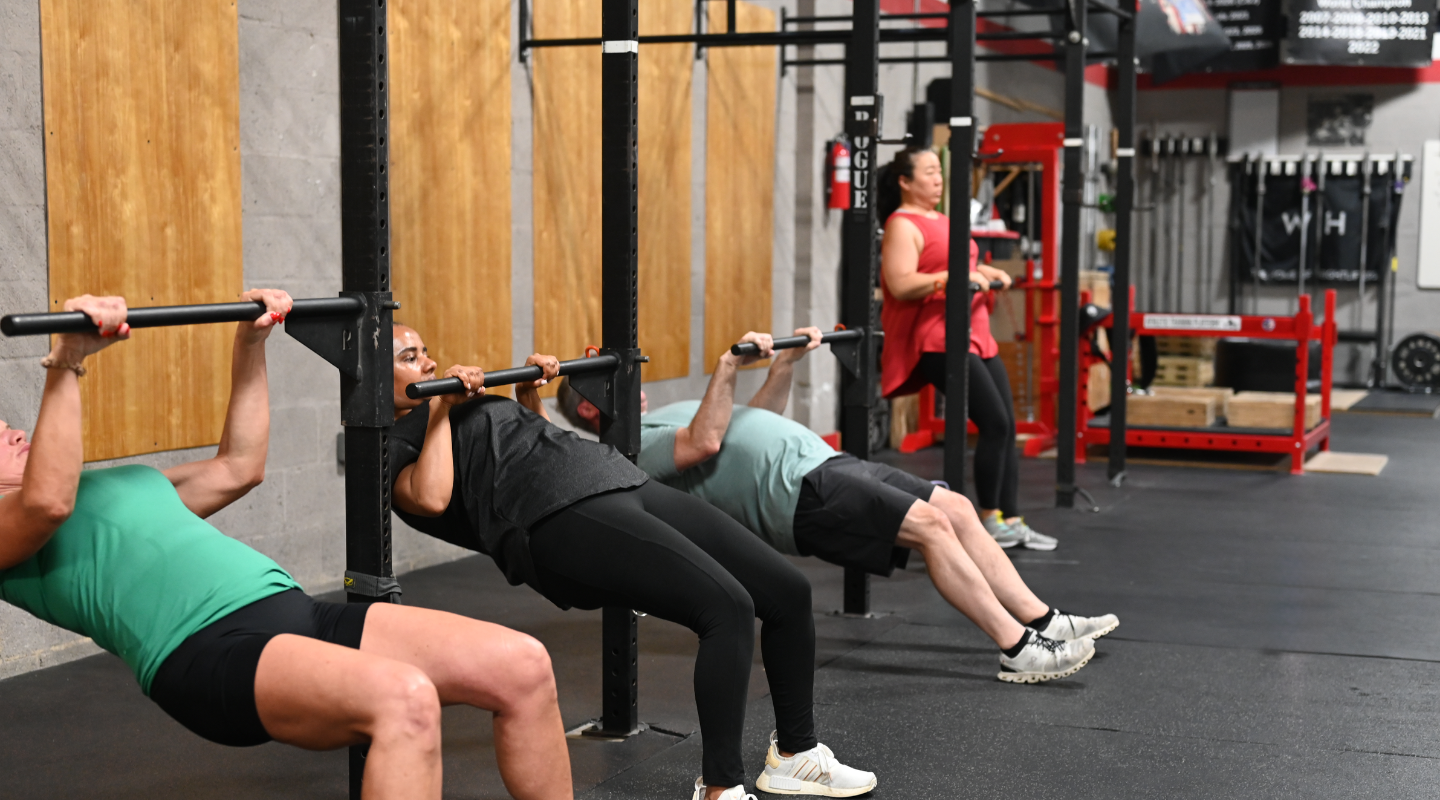
Does this look familiar? We do a version of this before most CrossFit classes here at Trident.
The Bottom Line
Static stretching isn't "bad"—it simply has the wrong timing for certain activities. It's still an excellent tool for improving flexibility and range of motion over time. However, if your goal is to perform at your best during a workout or competition, save longer static stretching sessions for after exercise or perform them as part of a separate flexibility routine.
Takeaway: Warm up to move, not just to stretch. Dynamic movement prepares your muscles and nervous system for performance, while prolonged static stretching is better reserved for recovery or dedicated mobility work.
















.png)









.jpg)