How Structured Skill Development Changes Everything
Hit a CrossFit plateau? Learn why intensity alone stops working—and how structured skill progressions in gymnastics and Olympic lifting unlock long-term performance gains.
By
April 11, 2026


CrossFit Plateau
How Structured Skill Development Changes Everything
CrossFit has transformed the world of fitness by introducing a training model that is varied, intense, and highly engaging. Millions of people around the world now train with the goal of improving their overall fitness, building strength, and pushing beyond their perceived limits.
However, after spending years training and competing in this environment, a common pattern becomes clear: after an initial period of rapid progress, many athletes eventually reach a plateau.
They continue to train consistently — show up to classes, complete the workout of the day, and push themselves physically. Yet despite this effort, improvements in strength, technical skills, or overall performance often slow down or stop entirely.
This raises an important question: why does this happen? (After 10 years, I've asked this question many times.)
The One-Hour Class Problem
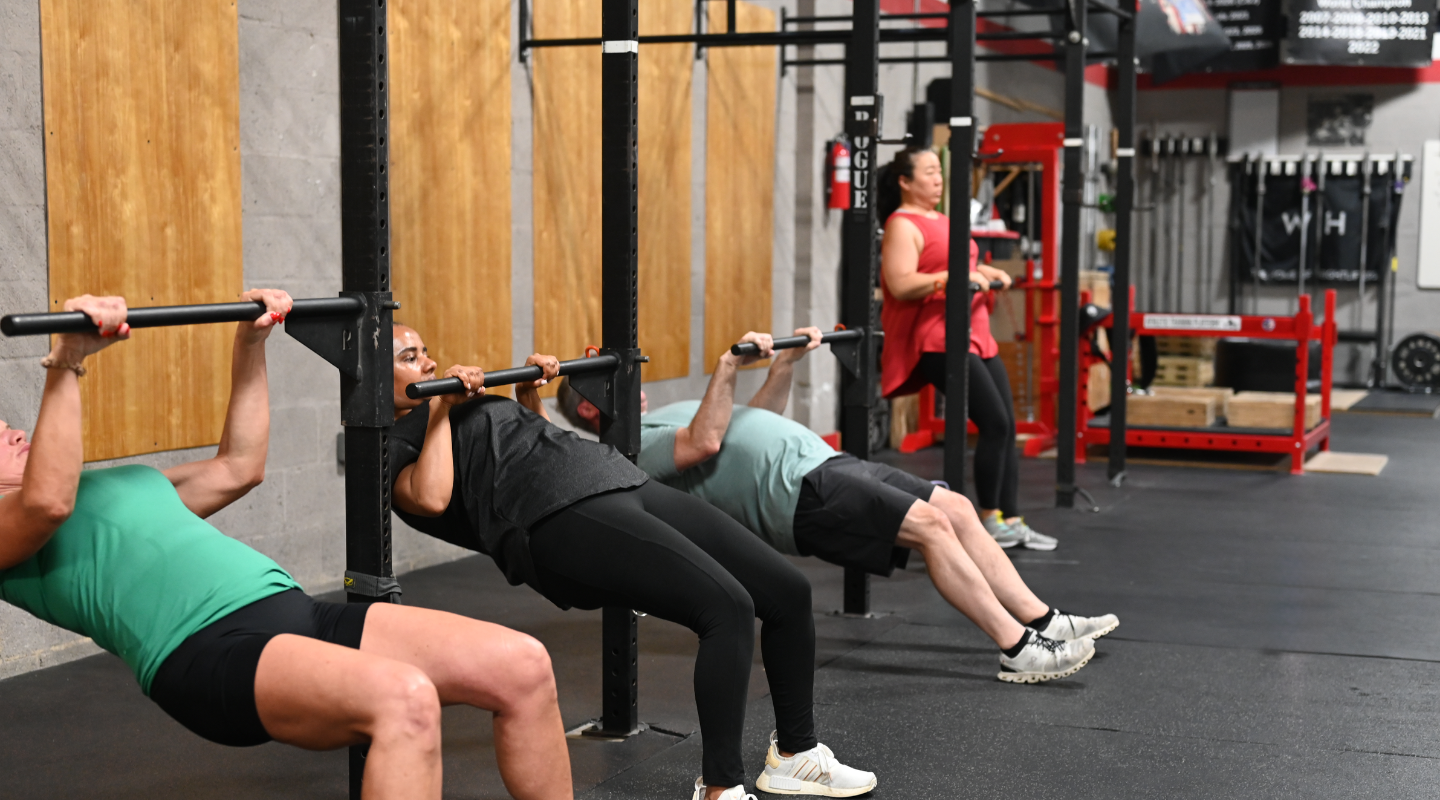
In most CrossFit gyms, classes follow a structure that works very well for group training: a warm-up, a strength or skill segment, and the Workout of the Day. This format is extremely effective for improving general fitness and creating a motivating group environment. However, because most classes last around one hour, there is often limited time available for deeper technical development or structured progression of complex skills.
Movements such as muscle-ups, handstand walks, Olympic lifts like the snatch and clean & jerk, and double-unders require years of consistent practice and carefully designed progressions to master.
When these movements appear primarily inside high-intensity workouts, many athletes either modify them or avoid practicing them with the structure necessary to truly improve. Over time, this creates a very common outcome: the athlete's conditioning improves, but their technical skill set remains limited.
Intensity Without Progression
One of the greatest strengths of CrossFit is its emphasis on intensity. Fast-paced, challenging workouts can be incredibly motivating and rewarding. However, when intensity becomes the primary focus of training, technical development can sometimes take a secondary role.
Without structured progressions in strength, gymnastics, and movement control, athletes eventually reach a point where cardiovascular conditioning alone is no longer enough to continue improving.
At that stage, many athletes realize something important: they are no longer training to improve skills — they are simply training to get through the workout.
Structured Skill Development
Long-term progress in CrossFit requires something more than just intensity. It requires structured skill development — dedicating time to building movement patterns through progressive stages:
When these elements are trained consistently and with proper structure, athletes begin to unlock skills that once seemed impossible. More importantly, they begin to understand how to progress in the sport, rather than simply completing workouts.
The Bigger Takeaway
Plateaus in CrossFit rarely happen because athletes are not training hard enough. More often, they occur because training is not structured to develop the technical abilities required for the next level of performance.
When training begins to emphasize movement quality, skill progression, and long-term development, something remarkable happens: movements that once seemed impossible begin to feel attainable.
At that point, CrossFit becomes more than just an intense workout. It becomes a true journey of athletic development.
— Coach Mateus Ferro













.png)








.jpg)