Fiber: The Underrated Nutrient Your Health Needs
Fiber does more than keep you regular. Here is how much you need, what 25–38 grams looks like, and when sugar alcohols are the real problem.
By
October 29, 2026
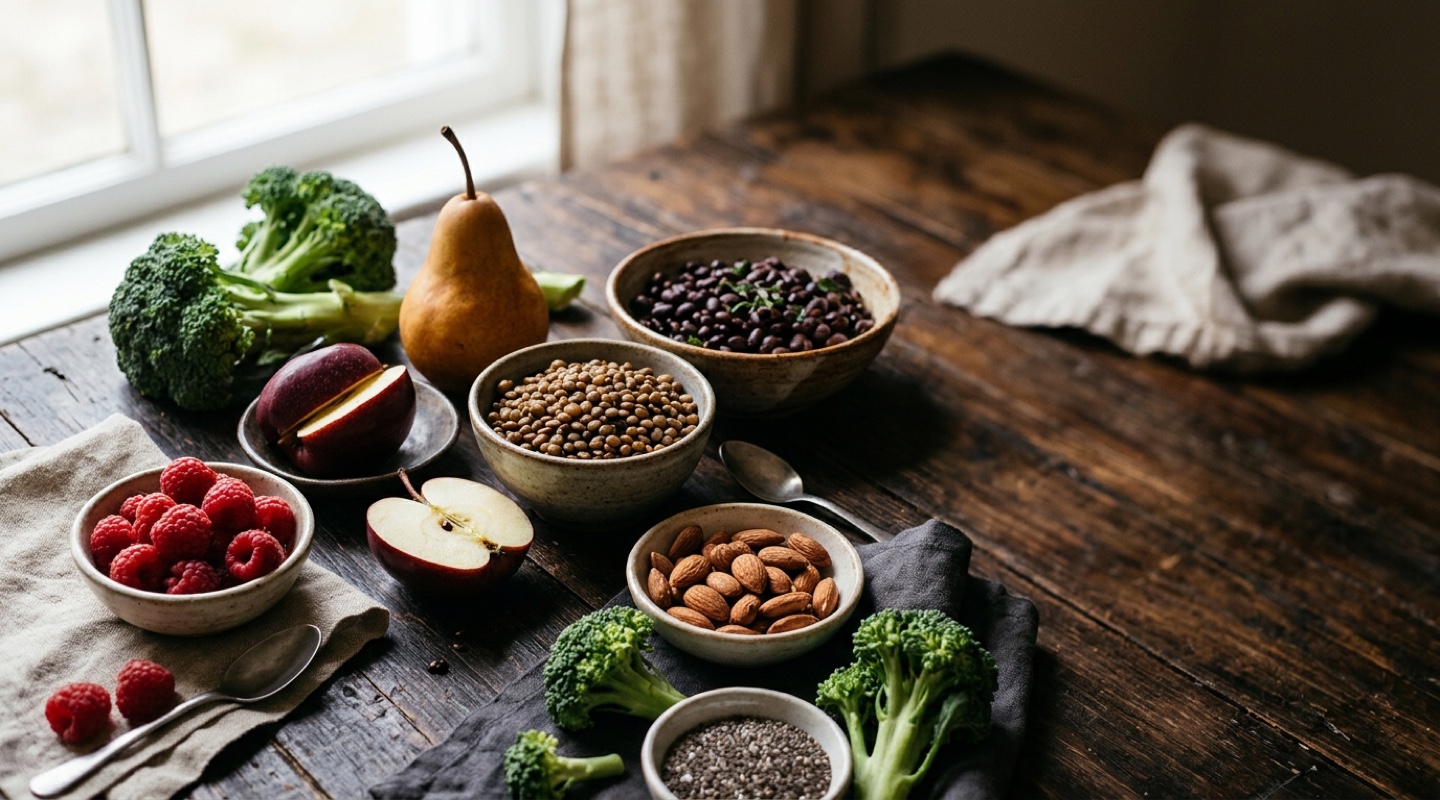
TL;DR: Fiber deserves attention too. Not just for regularity, but for gut health, appetite control, blood sugar, cholesterol, and long-term health. Soluble fiber helps feed beneficial gut bacteria, while insoluble fiber adds bulk and keeps digestion moving; you benefit from both. Aim for roughly 25–38 grams daily from varied whole foods such as beans, berries, vegetables, whole grains, nuts, and seeds. Increase gradually, drink enough fluids, and adjust to your tolerance rather than chasing the highest number. If “high-fiber” products cause digestive trouble, check for sugar alcohols: sweeteners such as sorbitol, mannitol, maltitol, and erythritol commonly found in protein bars, keto products, and low-sugar foods. Some can cause gas, bloating, or diarrhea, so fiber itself may not be the culprit.
Protein gets plenty of attention, especially in the gym and now (appropriately) among those on GLP-1s. But fiber deserves a place in the conversation. Beyond keeping you regular, it supports gut health, appetite control, blood sugar, and cholesterol. Higher fiber intake is also associated with lower risks of several chronic diseases.
Fiber is a carbohydrate your body cannot completely digest. Much of it reaches the colon, where it either feeds gut bacteria or helps move waste through your digestive tract.
Neither is inherently better. Eating a variety of plant foods helps you get both.
You don’t need enormous bowls of bran or a cabinet full of supplements. Spread fiber-rich foods throughout the day rather than eating them all at once.
These are examples of foods to incorporate into your meals and snacks—not complete daily meal plans. Fiber amounts vary with portion size, preparation, and product.
Aim for roughly 25–38 grams daily, primarily from whole foods. Small additions add up: berries at breakfast, beans with lunch, an apple with its skin, or an extra vegetable at dinner.
Increase gradually and drink enough fluids. Suddenly adding large amounts can cause gas and bloating, and different foods affect people differently. The goal is a sustainable intake—not the highest possible number.
Digestive trouble after a protein bar or keto snack may come from sugar alcohols rather than fiber. These sweeteners—including sorbitol, mannitol, maltitol, and erythritol—appear in many low-sugar products. Some can cause gas, bloating, or diarrhea, particularly in larger amounts. Check the ingredients before blaming all fiber-rich foods.
Fiber doesn’t need to be complicated. Start with one or two simple changes—add berries to breakfast, beans to a meal, or an extra vegetable at dinner—and build from there. Choose variety, increase gradually, and let your digestion guide you. Just as protein earns its place in your routine, fiber deserves a consistent spot on your plate.